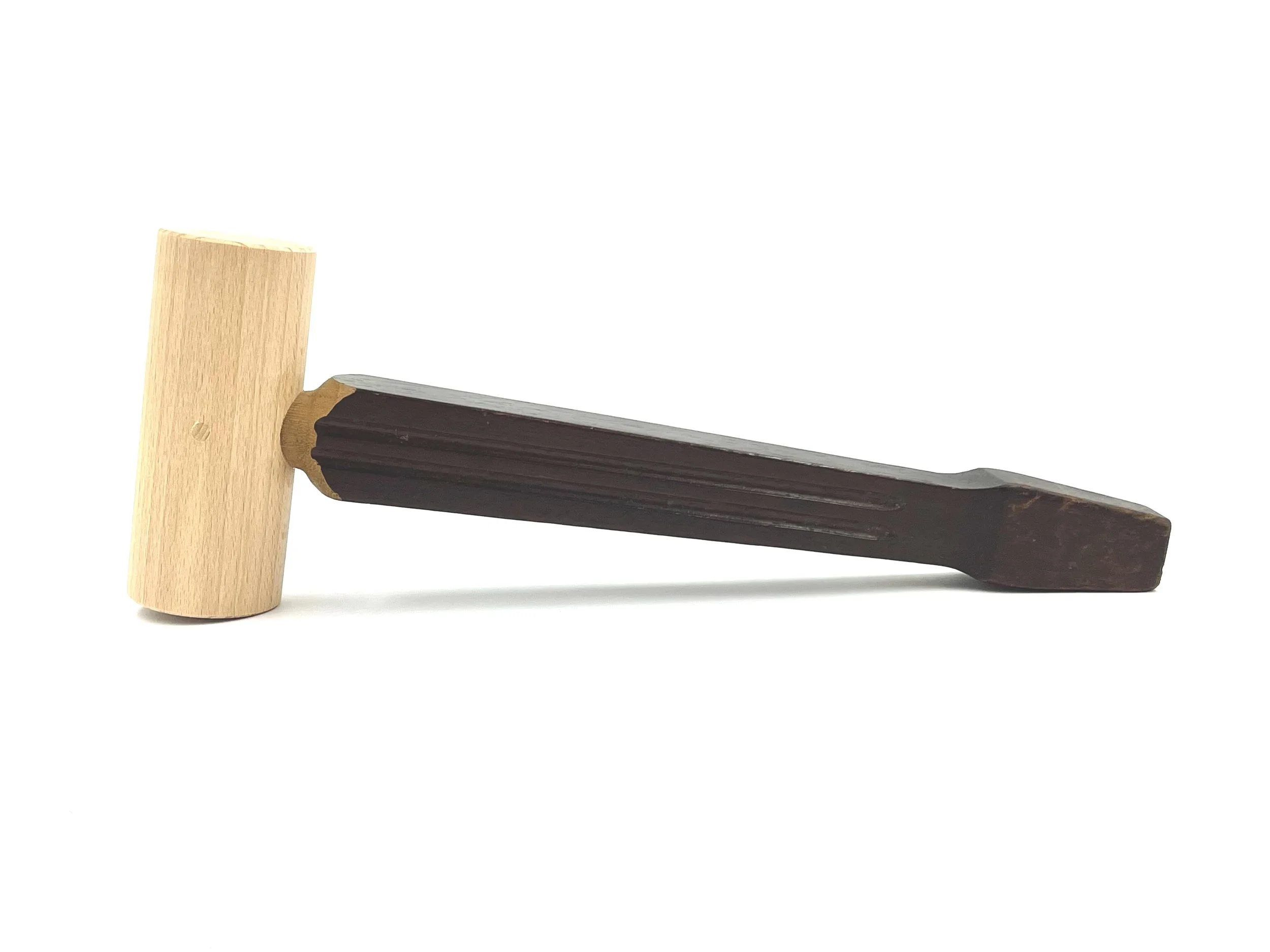
The Spolia collection of furniture is made from salvaged and reappropriated timber components.
- - - - - - - - - - - - - - - -
The initial pieces of the Spolia furniture collection were part of the Re-imagining Aydon exhibition of works by the Design Histories group created in response to the history, setting and atmosphere of Aydon Castle.
Craftspeople have always improvised the making and modification of their tools to suit their needs using materials to hand. These mallets and brushes are made from found materials, offcuts and unprocessed sticks.
These objects are part of an investigation of the anachronistic aesthetics of using remains and minimally processed materials.
——————————
Materials: Beech, Oak, Sticks, Chair leg, Paracord, Offcut draft excluder
These logs of kiln dried Ash logs have a powder coated steel handle attached with a brass thumbscrew. Some thumbscrews have 1:50 scale cast brass individuals soldered to them. The doorstops are part of an investigation of the anachronistic aesthetics of using remains and minimally processed materials.
____________________________
Materials: Firewood, steel and brass
Workholding Devices designed and made with and for young people.
This is a project that draws on the rich history of workholding devices for woodworkers to inform new mobile workbenches that can decentralise the practice of woodwork and thereby increase participation in the activity.
This is an ongoing piece of work that explores the use of low work benches that are built around the use of body weight and holdfasts to immobilise a workpiece. By creating simple to make and relatively light weight devices that are easy to transport and store, the intention is to free the practice of woodwork from the grip of the immoveable heavy woodwork benches typically found in schools and colleges.
The project is a collaboration with a North-East based creative arts organisation Kids Kabin that runs regular pop-up community based making activities for young people.
Rulers: (created for the Tools for Everyday life “rulers” project)
There are potential narratives about scale, the decorative role of brass, agreed units of measure and what is lost by and gained from the processing of natural materials, that could be projected on to these almost useless objects. They are a series of 12 inch (304.8) mm sticks and one Yard (914.4mm) stick with cast brass 1:50 scale models finding somewhere to stand or sit.
The goal of the Tools for Everyday life project is to engage people as physically skilled operators of functional products rather than passive spectators of a designed experience. By imbuing everyday items with qualities of good tools and workshop equipment the intention is to design products that are a physical pleasure to use.
The project draws it’s designers from the community of practice that surrounds BA(hons) 3D Design and the post graduate Designers in Residence scheme at Northumbria University.
The Tools for Everyday Life project and the briefs it sets to the designers result in both commercially viable artefacts and opportunities for designers to articulate their positions on the creation of things in general and the relationship between craft knowledge and product design more specifically. Launching the artefacts at Trade fairs alongside established design brands, and presenting them for sale, places the products firmly in a commercial context.
The project is documented and reflected upon through its website and the irregularly published newspaper The Northern Tool.
Here’s a bit on Core77 about the project and a review at SightUnseen.
The art work for the promotional beermats and posters are by Neil Conley.
This time a 1:50 scale sitting brass man finds himself soldered to an American made cast iron frying pan.
The man watching food being fried is a little sinister, but over time as the pan is seasoned through use, the brass man too picks up the finish and scars of what is happening around him.
There are any number of potential stories to be projected on to a product where a figure both watches a function take place and over time becomes more part of the product.
The pan is by Lodge Cast Iron. Lodge opened his first foundry in 1896 in the town of South Pittsburg, Tennessee. Via a commitment to quality and a willingness to embrace advances in technology, Lodge Cast Iron continue to make cookware products in South Pittsburgh.
The ‘Pan’ was produced in an edition of 2 and first shown at the International Contemporary Furniture Fair (ICFF) 2016 New York City.
The intention has been to keep the forms of these money boxes simple to draw attention to the slot where coins are dropped. The colour, shape and details reference products commonly found in a workshop environment. These containers are made from turned oak.
Two of them incorporate tin cans as receptacles for the money (coins make a rewarding sound as they find a home in the cans). I have always liked the shape of tin cans and appreciated how well they work. They are rather more handsome when they have been stripped of their labels and the ribbed flanks have been exposed.
Once full of cash the cans and boxes can be emptied via access through the discreetly removable bases or via the loosening of the jubilee clips that secure the cans.